
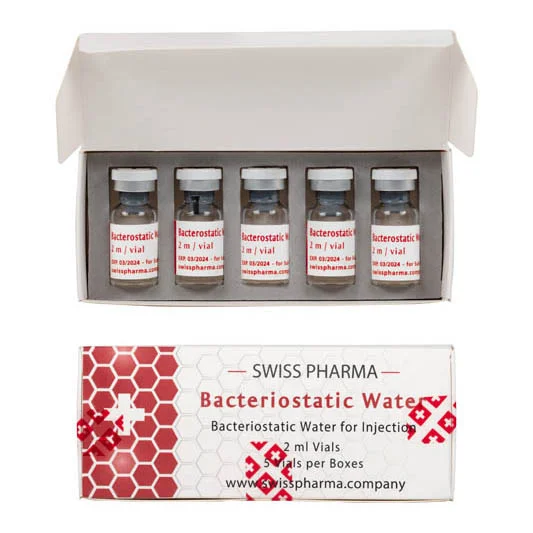
Ensuring Sterility and Safety in Injectable Therapies
What Is Bacteriostatic Water?
Bacteriostatic Water is a sterile, nonpyrogenic solution of water for injection containing 0.9% (9 mg/mL) benzyl alcohol as a bacteriostatic preservative. It is designed for diluting or dissolving drugs that require reconstitution before injection. Unlike sterile water, which is intended for single-use only, bacteriostatic water can be used multiple times, making it ideal for medications that are administered in multiple doses over time .
Key Benefits:
-
Prevents Bacterial Growth: The benzyl alcohol in bacteriostatic water inhibits bacterial growth, maintaining the sterility of the solution during multiple withdrawals.
-
Extends Shelf Life: Allows reconstituted medications to be stored safely for longer periods, reducing waste and improving cost-effectiveness.
-
Versatile Use: Suitable for diluting or dissolving injectable medications, including peptides, hormones, and other biologics .
Usage Guidelines:
-
Reconstitution: Follow the manufacturer’s instructions for the specific medication being reconstituted. Typically, bacteriostatic water is used to reconstitute peptides, hormones, or other injectable medications in amounts ranging from 0.5mL to 2mL per vial of medication.
-
Administration: After reconstitution, administer the medication as directed by a healthcare professional.
-
Storage: Store at room temperature (15-30°C or 59-86°F), away from direct sunlight. Do not freeze. Discard 28 days after first use or as directed by the medication instructions .
Safety Considerations:
-
Not for Use in Neonates: Bacteriostatic water contains benzyl alcohol, which can cause serious adverse reactions, including “gasping syndrome,” in neonates and low-birth-weight infants. It should not be used in this population unless absolutely necessary .
-
Proper Handling: Always use aseptic technique when withdrawing from the vial to prevent contamination.
-
Expiration: Discard any unused solution after 28 days of opening to ensure safety and efficacy .
- Bacteriostatic Antibiotics: Drugs like tetracyclines (e.g., doxycycline), macrolides, clindamycin, and sulfonamides. They often work by blocking bacterial protein synthesis or metabolic pathways. You can read more via StatPearls – NCBI Bookshelf. [1, 2, 3]
- Bacteriostatic Water: Sterile water mixed with a small amount (0.9%) of benzyl alcohol, commonly used to dilute medications for repeated injections without letting bacteria grow in the vial. [1]
- Preservatives & Surfaces: Chemical agents added to plastics, cosmetics, or lab solutions to keep bacteria from multiplying. [1]
- Bacteriostatic: Stops or slows down bacteria (like a yellow traffic light), leaving removal to the immune system.
- Bactericidal: Kills bacteria directly (like a red stoplight), causing permanent cell death (such as with penicillin or vancomycin).
What is the difference between bacteriostatic and bactericidal?
- Mechanism of Action:
- Bactericidal: Disrupts vital cellular structures like cell walls (e.g., penicillin, vancomycin), cell membranes, or DNA replication.
- Bacteriostatic: Interferes with metabolic pathways, protein synthesis, or DNA replication (e.g., tetracyclines, macrolides) to freeze the bacteria in a stationary growth phase.
Oxford Academic +3
- Role of the Immune System:
- Bactericidal: Reduces or eliminates bacterial populations largely on its own, making them essential for patients with weakened immune systems.
- Bacteriostatic: Keeps the bacterial count stable so the host’s natural immune system can step in and clear the remaining organisms. If the drug is removed too early, the surviving bacteria can resume multiplying.
YouTube·Biology Professor +2
- Common Examples:
- Bactericidal: Penicillins, cephalosporins, vancomycin, aminoglycosides, and fluoroquinolones.
- Bacteriostatic: Tetracyclines, macrolides (like erythromycin), sulfonamides, and clindamycin.
- Clinical Application:
- Bactericidal: Preferred for severe, life-threatening, or deep-seated infections such as endocarditis, meningitis, sepsis, or patients who are immunocompromised.
- Bacteriostatic: Often used for milder, uncomplicated infections (such as standard skin, soft tissue, or urinary tract infections) where a healthy immune system is present.
National Institutes of Health (NIH) | (.gov) +2

Reviews
There are no reviews yet.