
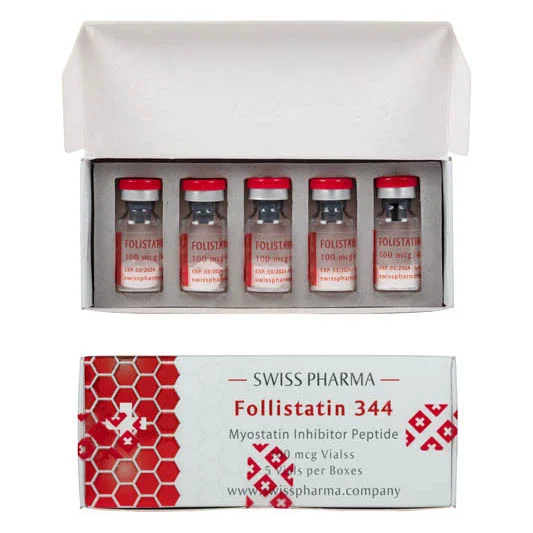
What Is Follistatin 344?
Follistatin 344 is a synthetic peptide that inhibits myostatin, a negative regulator of muscle growth. By binding to and neutralizing myostatin and other transforming growth factor-beta (TGF-β) proteins, Follistatin 344 promotes muscle cell proliferation and differentiation, leading to increased muscle mass and strength
Key Benefits:
-
Enhanced Muscle Growth: Follistatin 344’s myostatin-blocking capabilities enable substantial muscle growth and improved muscle strength, highly beneficial for athletes and those undergoing muscle rehabilitation.
-
Accelerated Recovery: Supports rapid muscle recovery from fatigue or injuries, reducing rehabilitation time and enabling more frequent and intensive training sessions.Reduced Muscle Wasting: Helps prevent muscle atrophy and promotes muscle health during periods of inactivity or recovery
-
Improved Metabolism: Strengthened muscle function positively impacts overall metabolism, contributing to better overall health.
Usage Guidelines:
-
Dosage: Typical dosages range from 100–300 mcg every other day, depending on study duration and model.
-
Administration: Administered via subcutaneous or intramuscular injection.
-
Cycling: Research cycles often last 2–4 weeks, sometimes longer for studies on chronic conditions like sarcopenia or muscle wasting.
Safety Considerations:
-
Side Effects: Common side effects may include mild irritation at the injection site, fatigue, and temporary water retention.
-
Not FDA-Approved: Follistatin 344 is not approved by the FDA for general use and should only be used under the supervision of a qualified healthcare professional.
Conclusion:
Follistatin 344 is a potent peptide that can enhance muscle growth, accelerate recovery, and support overall muscle health. While it offers promising benefits, it’s essential to use it responsibly under medical supervision to ensure safety and efficacy.
- Follistatin 315 (FST315): The primary circulating form found in the bloodstream, which mainly targets muscle and general tissue.
- Follistatin 288 (FST288): A form with high heparin and cell affinity, heavily involved in reproductive tissues and cellular signaling.
- Not Approved / Regulatory Status: Injectable follistatin peptides and research chemicals are not FDA-approved for medical use. [1]
- Banned in Sports: Myostatin-binding proteins, including follistatin, are prohibited at all times by the World Anti-Doping Agency (WADA). [1]
What does follistatin do in the body?
- Inhibits Myostatin: It binds to and neutralizes myostatin, a protein that normally acts as a “brake” or limit on skeletal muscle growth. By blocking myostatin, follistatin helps remove this restriction, promoting muscle fiber growth, regeneration, and strength.
CETAF – Consortium of European Taxonomic Facilities +2
- Neutralizes Activins: It blocks activins, which are involved in inflammation, cell differentiation, and fibrosis (scar tissue buildup).
Patsnap Synapse +1
- Regulates Reproductive Hormones: It suppresses the synthesis and secretion of follicle-stimulating hormone (FSH) from the pituitary gland and plays a role in ovarian follicle development (folliculogenesis)
.
Wikipedia +1
- Supports Metabolism and Body Composition: It is studied for its potential to help decrease body fat (such as abdominal fat), improve glucose handling, and encourage adipocyte browning (converting white fat to brown fat).
CETAF – Consortium of European Taxonomic Facilities +1
- Aids Bone and Tissue Repair: By suppressing myostatin and activin signals in bone and muscle cells, it supports osteoblast activity (bone-forming cells) and speeds up post-injury tissue recovery.
National Institutes of Health (NIH) | (.gov) +1


Reviews
There are no reviews yet.